Kamis, 30 Januari 2020

Japan Issues Arrest Warrants for Three Men Suspected of Helping Ghosn Escape - The Wall Street Journal

Carlos Ghosn in Beirut on Jan. 8. Photo: mohamed azakir/Reuters

TOKYO—A Japanese court on Thursday issued arrest warrants for three Americans who prosecutors said were suspected of helping former Nissan Motor Co. Chairman Carlos Ghosn escape Japan in late December by hiding inside luggage.

Tokyo prosecutors said former Green Beret Michael Taylor, 59, and his son Peter Taylor, 26, as well as Lebanese-born U.S. citizen George Zayek, 60, were suspected of violating Japan’s immigration-control laws. The three didn’t immediately respond to a request for comment.

In a statement, prosecutors confirmed the widely reported outlines of Mr. Ghosn’s daring escape, saying he hid in a piece of luggage and boarded a private jet that departed Kansai International Airport in Osaka at about 11 p.m. on Dec. 29. Tokyo deputy chief prosecutor Takahiro Saito also described for the first time what he said was the central role played by the younger Mr. Taylor.

Carlos Ghosn Details Why He Escaped Japan

Former automotive executive Carlos Ghosn said he “fled injustice” in Japan. WSJ’s Chip Cummins explains what a recent crowded press conference in Beirut tells us about Mr. Ghosn’s next steps. Photo: Maya Alleruzzo/Associated Press

Mr. Saito said Peter Taylor came to Japan in the summer of 2019 and met Mr. Ghosn four times at the office of Mr. Ghosn’s Japanese lawyer in Tokyo. Peter Taylor and Mr. Ghosn met again on Dec. 6 and Dec. 28, the day before Mr. Ghosn’s escape, according to the prosecutor, who declined to give the location of those meetings. He said authorities believed the meetings were to plan an escape.

Mr. Saito said he believed Mr. Taylor handed Mr. Ghosn a key to a Tokyo hotel room at the Dec. 28 meeting. On the afternoon of the next day, Mr. Ghosn went to the hotel from his Tokyo house and let himself into a room reserved by Mr. Taylor, the prosecutor said. Mr. Ghosn changed his clothes at the hotel before heading to Osaka, prosecutors said.

Michael Taylor and Mr. Zayek accompanied Mr. Ghosn to the Kansai airport and onto the private jet, Mr. Saito said, confirming earlier reports in The Wall Street Journal. He didn’t say what Peter Taylor did after helping Mr. Ghosn prepare for the journey, but a Japanese magazine called Friday said an American in his 20s resembling Peter Taylor took a taxi to Tokyo’s Narita Airport from the Tokyo hotel and left the country.

At the Kansai airport, Mr. Ghosn sneaked onto the private jet by hiding inside luggage, evading the immigration officers who normally check those departing the country, and flew to Turkey en route to Lebanon, prosecutors said.

Prosecutors didn’t specify the type of luggage in which Mr. Ghosn hid, but The Wall Street Journal has reported it was a black box normally used to carry musical equipment.

Mr. Ghosn was living in Tokyo awaiting trial on financial charges before his escape. After spending 130 days in jail over two separate stints, he was freed on bail in April 2019. He was permitted to travel within Japan but was barred by the Tokyo District Court from leaving the country.

Mr. Saito, the prosecutor, said a raid Wednesday on the office of former Ghosn lawyer Junichiro Hironaka, in which prosecutors broke open drawers to view documents, was aimed at gathering evidence against Peter Taylor.

Mr. Ghosn has said he is innocent of the charges against him. Citing his lengthy detention after his arrest and Japan’s conviction rate of more than 99% for people charged with a crime, he has said he couldn’t get a fair trial in Japan and fled injustice. Another former lawyer for Mr. Ghosn, Takashi Takano, has said he understands why Mr. Ghosn chose to flee given what he described as the Japanese justice system’s bias in favor of prosecutors.

Mr. Saito said people who expressed such views were spreading lies. He said his office, which typically doesn’t announce the issuance of arrest warrants, made an exception in the case of the alleged Ghosn collaborators to make clear its view that the escape was a crime and Mr. Ghosn should have stayed in Japan to face trial.

Write to Peter Landers at peter.landers@wsj.com

Copyright ©2019 Dow Jones & Company, Inc. All Rights Reserved. 87990cbe856818d5eddac44c7b1cdeb8

Let's block ads! (Why?)


https://news.google.com/__i/rss/rd/articles/CBMidGh0dHBzOi8vd3d3Lndzai5jb20vYXJ0aWNsZXMvamFwYW4taXNzdWVzLWFycmVzdC13YXJyYW50LWZvci10aHJlZS1tZW4tc3VzcGVjdGVkLW9mLWhlbHBpbmctZ2hvc24tZXNjYXBlLTExNTgwMzcwNTQ50gEA?oc=5

2020-01-30 09:47:00Z
52780580543333

Japan issues arrest warrants for ex-U.S. soldier, two others for Ghosn escape - Reuters

FILE PHOTO: Former Nissan chairman Carlos Ghosn gestures during a news conference at the Lebanese Press Syndicate in Beirut, Lebanon January 8, 2020. REUTERS/Mohamed Azakir

TOKYO (Reuters) - Japanese authorities on Thursday issued arrest warrants for a former U.S. special forces soldier and two other men on suspicion of smuggling former Nissan Motor Co (7201.T) boss Carlos Ghosn out of Japan.

Warrants were issued for former U.S. Green Beret Michael Taylor and two other men, George-Antoine Zayek and Peter Taylor, prosecutors said in a statement. A warrant was also issued for Ghosn for illegally leaving the country, prosecutors said.

Ghosn fled to Lebanon, his childhood home, at the end of last year, while he was awaiting trial on charges of under-reporting earnings, breach of trust and misappropriation of company funds, all of which he denies.

The arrest warrants come days after prosecutors searched the Tokyo office of Ghosn’s former lawyer.

Lebanon and Japan have about 40 days to decide whether Ghosn will be extradited to Japan or stand trial in Lebanon, Reuters reported last week.

The two countries have no extradition treaty and Lebanon does not typically hand over its nationals. Ghosn’s legal team is hoping to hold the trial in Lebanon, where the former auto executive has deep ties and hopes to clear his name.

Ghosn has struck out at what he has called Japan’s unjust judicial system and said the alternative to fleeing would have been to spend the rest of his life languishing in Tokyo without a fair trial.

Reporting by Kiyoshi Takenaka and Junko Fujita; Editing by David Dolan, Christian Schmollinger and Lincoln Feast.

Let's block ads! (Why?)


https://news.google.com/__i/rss/rd/articles/CBMihAFodHRwczovL3d3dy5yZXV0ZXJzLmNvbS9hcnRpY2xlL3VzLW5pc3Nhbi1naG9zbi90b2t5by1wcm9zZWN1dG9ycy1pc3N1ZS1hcnJlc3Qtd2FycmFudHMtZm9yLWdob3NuLWV4LXUtcy1zb2xkaWVyLWt5b2RvLWlkVVNLQk4xWlQwREvSATRodHRwczovL21vYmlsZS5yZXV0ZXJzLmNvbS9hcnRpY2xlL2FtcC9pZFVTS0JOMVpUMERL?oc=5

2020-01-30 05:33:00Z
52780580543333

Rabu, 29 Januari 2020

American Airlines suspends two routes to China as coronavirus spreads - CNN

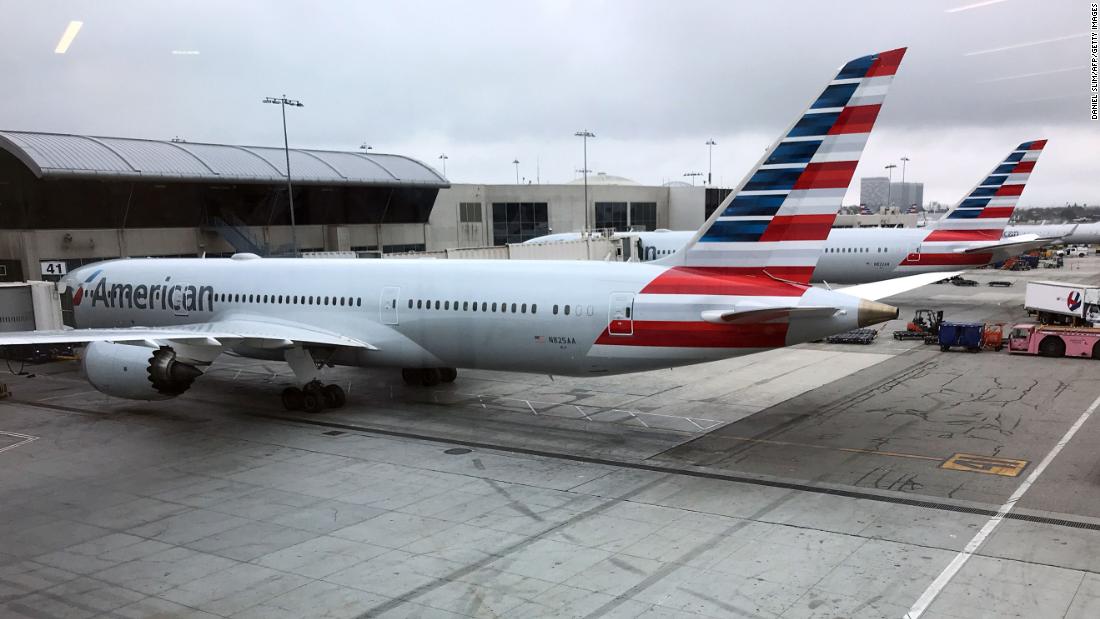
The airline is canceling two routes between February 9 and March 27 because of "significant decline in demand." The canceled flights include those between Los Angeles and Shanghai (PVG) and Los Angeles and Bejing (PEK).
American Airlines (AAL) will continue to operate service to Hong Kong from its Dallas-Fort Worth and Los Angeles hubs.
Passengers on the affected flights will be notified by the airline for rebooking options.
United Airlines (UAL) announced Tuesday is was suspending some flights between three Chinese cities and its US hubs. The airline said in a statement that the cancellations are because of a "significant decline in demand." Some United flights between February 1 and February 8 have been canceled.
In total, United canceled 24 round trip routes. They are between Hong Kong to San Francisco and Newark; Beijing (PEK) to Washington Dulles, Chicago O'Hare and Newark; and Shanghai (PVG) to San Francisco, Newark and Chicago O'Hare.
Global airlines are also adjusting their schedules. British Airways, Air Canada (ACDVF), Air Asia, Air India and Finland's Finnair have all suspended some flights between China and their respective countries.
Qatar Airways and Malaysia Airlines have not suspended flights, but passengers and crew traveling from China will be subjected to additional screening at airports.
Delta Air Lines (DAL), Virgin Atlantic, Lufthansa, Air France-KLM (AFLYY), and Austrian Airlines said they are monitoring developments but continue to fly to China.
As of Wednesday, there were 6,061 confirmed cases of the virus in mainland China, including 132 deaths, according to Chinese officials. The number of cases grew by around 1,500 from Tuesday, a more than 30% increase. The figures do not include Hong Kong and Macau, both of which have reported a small number of cases.
There have also been at least 91 cases of the virus reported outside mainland China.
-- CNN's James Griffiths contributed to this report.

Let's block ads! (Why?)


https://news.google.com/__i/rss/rd/articles/CBMiZ2h0dHBzOi8vd3d3LmNubi5jb20vMjAyMC8wMS8yOS9idXNpbmVzcy9hbWVyaWNhbi1haXJsaW5lcy1zdXNwZW5kcy1jaGluYS1mbGlnaHRzLWNvcm9uYXZpcnVzL2luZGV4Lmh0bWzSAWtodHRwczovL2FtcC5jbm4uY29tL2Nubi8yMDIwLzAxLzI5L2J1c2luZXNzL2FtZXJpY2FuLWFpcmxpbmVzLXN1c3BlbmRzLWNoaW5hLWZsaWdodHMtY29yb25hdmlydXMvaW5kZXguaHRtbA?oc=5

2020-01-29 15:40:00Z
52780579454003

Boeing posts first annual loss in 22 years because of the 737 Max crisis - CNN

The company reported a net loss of $636 million last year, compared to a $10.5 billion profit it made in 2018.
But its core commercial aircraft operation lost $6.7 billion last year, almost entirely because of Boeing's continued problems with the 737 Max. Revenue for the year plunged 24% because Boeing stopped deliveries of the 737 Max in March.
Boeing said it will pay an additional $2.6 billion to airline customers to compensate them for the grounding, which followed two fatal crashes that killed 346 people.
"We recognize we have a lot of work to do," said Boeing CEO Dave Calhoun in a statement. "We are focused on returning the 737 Max to service safely and restoring the long-standing trust that the Boeing brand represents with the flying public. Fortunately, the strength of our overall Boeing portfolio of businesses provides the financial liquidity to follow a thorough and disciplined recovery process."
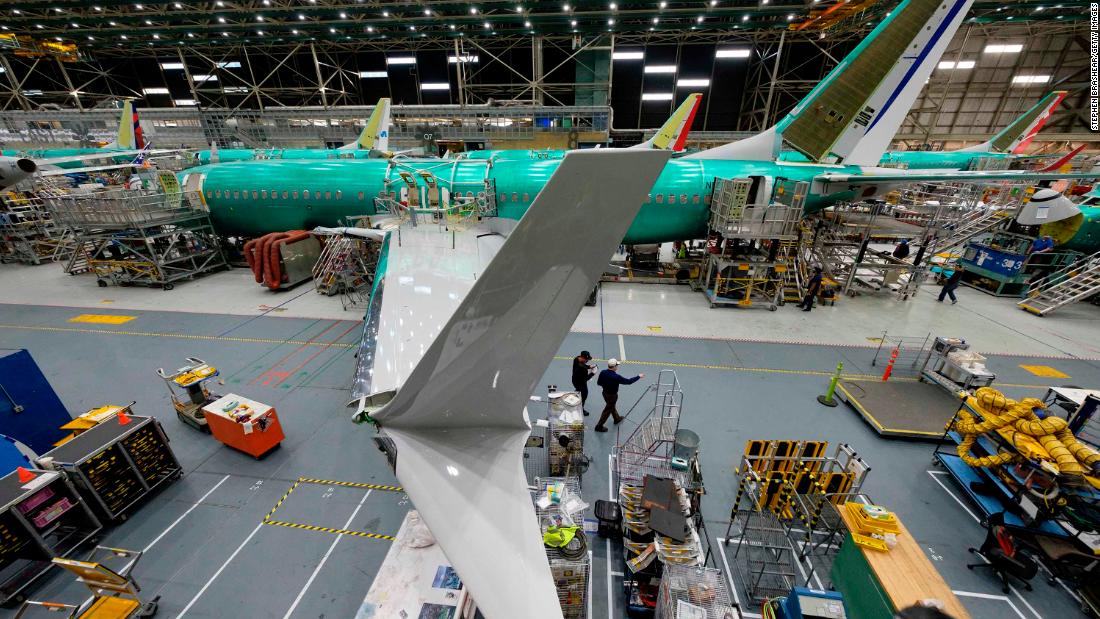
But the grounding will cost more than the amount Boeing owes airlines. The cost of producing the jet increased by $2.6 billion during 2019. Boeing had continued to build the Max throughout the year despite not being able to complete the deliveries and get most of the money for the plane from airline customers. It has about 400 completed jets parked in Washington state and Texas awaiting delivery.
Boeing also expects a cost increase of $4 billion in 2020 because of at temporarily shutdown of production earlier this month. Calhoun said last week it expects to restart the line in two or three months even without final approval for the plane to fly again.
All told the 737 Max crisis has cost Boeing more than $17 billion.
Boeing (BA) said last week it did not expect the plane will be approved to fly again until the middle of this year, although the Federal Aviation Administration subsequently said its approval could come before that time. The airlines have been adjusting their schedules, with United Airlines (UAL) executives saying last week that they don't expect to be able to use the plane during the upcoming summer travel season.
Although the 737 Max crisis is Boeing's biggest problem, other issues are dogging the company.
Slides it prepared for an investor call later Wednesday show it plans to record a charge for the Starliner space capsule it is developing for NASA. Starliner will need an additional uncrewed mission after it failed to reach the International Space Station as planned on its most recent flight. The amount of the charge was not indicated.
It also said that global trade tension is putting pressure on the widebody commercial jet market, Boeing's most profitable product. And it said the slowdown in production of the 787 Dreamliner widebody will stretch through at least 2023.
Correction: An earlier version of this story misstated Boeing's core loss.

Let's block ads! (Why?)


https://news.google.com/__i/rss/rd/articles/CBMiQWh0dHBzOi8vd3d3LmNubi5jb20vMjAyMC8wMS8yOS9idXNpbmVzcy9ib2VpbmctcmVzdWx0cy9pbmRleC5odG1s0gFFaHR0cHM6Ly9hbXAuY25uLmNvbS9jbm4vMjAyMC8wMS8yOS9idXNpbmVzcy9ib2VpbmctcmVzdWx0cy9pbmRleC5odG1s?oc=5

2020-01-29 13:32:00Z
52780578882393

Overnight flight evacuates 240 Americans out of Wuhan - CBS This Morning

Let's block ads! (Why?)


https://news.google.com/__i/rss/rd/articles/CBMiK2h0dHBzOi8vd3d3LnlvdXR1YmUuY29tL3dhdGNoP3Y9U3R2TWYwcjY1dWPSAQA?oc=5

2020-01-29 12:21:33Z
52780579454003

Boeing posts first annual loss in more than two decades as 737 Max crisis continues - CNBC

Boeing on Wednesday reported its first annual loss in more than two decades as costs from the 737 Max crisis rise sharply.

Boeing said it lost $636 million in 2019, marking the first annual loss since 1997. As a comparison, Boeing had posted a profit of $10.46 billion in 2018.

Boeing reported a loss of $2.33 per share for the fourth quarter of last year. Revenue in the last three months of the year dropped 37% to $17.91 billion compared with $28.34 billion in the year-earlier period.

Boeing's new CEO Dave Calhoun will speak to CNBC at 8 a.m. ET to discuss the company's results.

Boeing is struggling through a crisis stemming from two crashes of its 737 Max that killed all 346 people aboard the flights. The manufacturer this month suspended production of the planes, which regulators grounded in March after the second of the two fatal flights.

The debacle's costs to Boeing are rising to more than $18 billion, the company said, roughly double what it outlined in the previous quarter. That amount includes an additional $2.6 billion pretax charge to compensate airlines and other 737 Max customers because of the grounding. Boeing had taken a $5.6 billion pretax charge in the second quarter to compensate its customers.

The company recently reported its worst annual sales figures in decades and it handed the crown to the world's biggest aircraft manufacturer to its rival Airbus.

Calhoun, who took the reins this month, is set to face investors on his first earnings call at the helm of the company and is expected to detail the company's recovery plan and what it will cost. Boeing last week said it expects regulators to sign off on the planes mid-year, but the FAA has said it could come before that. 

This is breaking news. Check back for updates.

Let's block ads! (Why?)


https://news.google.com/__i/rss/rd/articles/CBMiP2h0dHBzOi8vd3d3LmNuYmMuY29tLzIwMjAvMDEvMjkvYm9laW5nLWJhLWVhcm5pbmdzLXE0LTIwMTkuaHRtbNIBQ2h0dHBzOi8vd3d3LmNuYmMuY29tL2FtcC8yMDIwLzAxLzI5L2JvZWluZy1iYS1lYXJuaW5ncy1xNC0yMDE5Lmh0bWw?oc=5

2020-01-29 12:07:00Z
52780578882393

Coronavirus Outbreak Tests World’s Dependence on China - The New York Times

HONG KONG — The world is quickly learning how much it depends on China.

Ford and Toyota will idle some of their vast Chinese assembly plants for an extra week. Apple is rerouting supply chains. Starbucks has closed thousands of stores and is warning of a financial blow.

On Wednesday, British Airways suspended all flights to mainland China, while United Airlines and Air Canada are joining the growing number of carriers reducing service. Japan’s leaders are bracing for a possible hit. Hotels and tour operators across Asia are watching fearfully as the world’s largest source of tourism dollars tightens its borders.

The mysterious, pneumonialike coronavirus that has killed more than a hundred people and sickened thousands has virtually shut down one of the world’s most important growth engines. Desperate to slow the fast-moving virus, the Chinese authorities have extended the country’s national holiday to Feb. 3, and crippled land, rail and air transport. Entire cities have shut down.

An impoverished nation just four decades ago, China has become an essential part of the modern global industrial machine. China alone accounts for roughly one-sixth of global economic output. It is the world’s largest manufacturer and trader.

It has become so crucial to the operations of American companies that some members of the Trump Administration cite that dependence as a justification for the trade war President Trump initiated two years ago against Beijing, an economic conflict that is forcing businesses to consider shifting their factories in China to countries with better relations with Washington.

Now the coronavirus is testing that dependence.

Automakers like General Motors and Nissan plan to close their factories until the week of Feb. 3 to comply with the longer mandated holiday, while Toyota and Ford said this week that they would close some of their factories a week longer than that because of virus-related disruptions. Companies like G.M., Honeywell, Facebook and Bloomberg restricted travel for employees in China and established their own self-quarantine measures.

On Tuesday, the Seattle-based coffee company Starbucks said it had closed more than half of its 4,292 stores in its second biggest market and said it would take a quarterly and full year financial hit.

The full extent of the hit to the broader business world is not yet clear. Most of China had already been shut down since at least Friday for the annual Lunar New Year holiday, a weeklong nationwide hiatus. But with the outbreak showing no signs of slowing, many companies are already preparing for a longer slowdown.

“Our members are dealing with varying degrees of disruption in their businesses, including supply chain issues, temporary closings of some retail outlets and factories, and other challenges,” said Jake Parker, the senior vice president of the US-China Business Council, which represents major companies. “If travel restrictions and quarantines are expanded or the holiday extended beyond Feb. 8, that will amplify these problems.”

China’s importance goes beyond what it makes. Its consumers buy more cars and smartphones than anybody else. When they go abroad, Chinese tourists spend $258 billion a year, according to the World Tourism Organization, nearly twice what Americans spend.

Global companies were reconsidering their China strategies even before the trade war began. Its growth is slowing, its labor costs are rising, local companies are increasingly competitive and the government has become less accommodating. Still, its skilled worker base, extensive highway and rail systems and vast consumer market make China tough to quit.

Many companies are now looking for temporary stopgaps.

Tim Cook, the chief executive of Apple, said on Tuesday that the iPhone maker was looking for alternative suppliers to “make up for any expected production loss.” Foxconn, a Taiwanese company with an extensive network of factories in China that make gadgets on behalf of Apple and others, said its factories would continue to follow the new holiday schedule.

Apple is not the only company that has had to pivot quickly. Just last week, executives of Honeywell, the American engineering company, traveled to Wuhan for a ceremony related to its plans to open an innovation headquarters. Two days later, Wuhan was put under lockdown by the authorities. Honeywell has since restricted travel to certain parts of China.

Wuhan in particular appeals to major companies because it is a major national transport hub. The auto industry, including General Motors, Honda, Nissan and many others have set up shop there, and many of their suppliers have followed. It is the home to more than one third of all French investment in China.

On Monday, PSA Group, the French automaker, said it had set up crisis communications between Wuhan and its Paris headquarters to determine the potential impact on production. The company employs about 2,000 people in Wuhan through its joint venture and was evacuating 38 expatriates.

It is not clear how quickly businesses will bounce back. During the deadly SARS outbreak 17 years ago, which began in China and killed hundreds globally, some factories paid higher wages to bring workers back and get factories humming again.

Right now, businesses do not know enough to make those kinds of plans. Cummins, the Indiana company, does not know whether it will be able to open its seven sites in Wuhan after the Feb. 3 holiday extension because the city remains under lockdown. The facilities make fuel and power systems for rail and marine industries.

“Literally, we are evaluating on an ongoing basis in real time,” said Jon Mills, a spokesman for Cummins, “and I imagine other places are in the same position as we are.”

Ford, which does not have any operations in Wuhan, said several of its major plants would nevertheless be idled until Feb. 10. A spokesman declined to disclose further details. The factories in four cities churn out nearly half a million vehicles a year, or an average of 9,400 cars a week.

Businesses in other countries are also trying to determine the impact.

In Japan on Tuesday, Yasutoshi Nishimura, the minister of state for economic and fiscal policy, told a group of reporters that, “If the situation takes longer to subside, we’re concerned it could hurt Japanese exports, output and corporate profits.” Chinese visitors account for about 30 percent of all foreign tourists, and Chinese companies are major buyers of Japanese-made components, like semiconductors and lenses.

In Thailand, Chinese sightseers spend nearly $18 billion annually, totaling about a quarter of tourist spending.

“Chinese tourists are the number one tourists to Thailand,” said Yuthasak Supasorn, the governor of the Tourism Authority of Thailand. Mr. Yuthasak said in an interview that the government was exploring ways to compensate business owners who have lost money from the drop in tourists over the past few weeks. The government was even considering reducing parking fees for airlines and excise tax on jet fuel to lure more tourists, he said.

Anan Buates, 45, runs a business driving tourists. Chinese tourists are crucial to his business. So he grew alarmed when tour operators started making last-minute cancellations as the coronavirus emerged. Then, last week, China canceled overseas group tours.

“It’s their right and it’s their policy to prevent the spreading of the coronavirus,” Mr. Anan said. Still, he knows he faces a daunting challenge.

“We survive the whole year because they come the whole year.”

Eimi Yamamitsu contributed reporting from Tokyo, Ryn Jirenuwat from Bangkok and Cao Li from Hong Kong.

Let's block ads! (Why?)


https://news.google.com/__i/rss/rd/articles/CBMiSmh0dHBzOi8vd3d3Lm55dGltZXMuY29tLzIwMjAvMDEvMjkvYnVzaW5lc3MvY2hpbmEtY29yb25hdmlydXMtZWNvbm9teS5odG1s0gFOaHR0cHM6Ly93d3cubnl0aW1lcy5jb20vMjAyMC8wMS8yOS9idXNpbmVzcy9jaGluYS1jb3JvbmF2aXJ1cy1lY29ub215LmFtcC5odG1s?oc=5

2020-01-29 11:05:00Z
52780578953416