Rabu, 28 Agustus 2019

Why record low bond yields could keep heading lower as market fears 'disaster scenario' - CNBC

Traders signal offers in the Ten-Year Treasury Note Options pit at the Chicago Board of Trade.

Scott Olson | Getty Images

Bond yields are heading south, and there appears to be no stopping them for now.

The benchmark 10-year Treasury note yield, which influences everything from business loans to home mortgages, has been hugging three-year lows and was at 1.45% Wednesday. That's below the 2-year yield of 1.5%, and the move has been signaling recession.

The 30-year Treasury bond yield fell to an all-time low 1.91% Wednesday as yields around the world, which move opposite price, slid to multi-year or record lows. U.S. rates followed a global move lower, with the Japanese 10-year yield falling to a new negative three-year low and the German 10-year bund yield sliding to its own record, minus-0.72%.

"This is one big trade," said Gregory Faranello, head of U.S. rates at Amerivet Securities. "The momentum and trends that are in place right now are pretty steadfast. There's nothing glaring to me that will change the dynamics right now. We're in the latter stages of the summer months. Liquidity is definitely an issue. When you look at it globally right now, it encompasses a lot of different, diverse things. Today we have the headline from the U.K.; you have this ongoing trade war, and this global yield structure just continues to unfold."

Strategists said the bond market has been caught between a number of forces and is now a vortex sucking in investors who have to buy yield, which keep getting lower as bond prices move higher. In the past several days, investors have begun to believe that there's a very good chance the trade wars between the U.S. and China could continue for a very long time, and possibly until after the presidential election.

Fear factors

The global economy is slowing, and increasingly there are warning signs that make it appear Europe could enter a recession. China's slowdown has sent a chill across emerging market economies, which have seen a decline in exports.

Then there is political uncertainty, which got even murkier in the U.K. on Wednesday, after Prime Minister Boris Johnson pushed back the reopening of Parliament until mid-October, limiting the amount of debate time and increasing the chances of a no-deal Brexit. Sterling fell and the 10-year gilt yield dropped to its lowest level in three years.

"The disaster scenario is if yields fall dramatically from here," said Michael Schumacher, director rates at Wells Fargo. "Hypothetically, if the trade situation intensifies, if maybe Hong Kong goes badly and Brexit seems like it results in a hard exit ... then what you probably get is a massive rally again in Treasurys."

"Anyone who is handing you a hard forecast in that scenario is throwing darts," he said. After the 10-year yield broke through the psychologically important 1.50% level Tuesday, Schumacher said investors are looking for the next target on the benchmark note at the record low it reached in the weeks after the U.K. voted for Brexit, or to leave the European Union.

"People seem to be fixated on 1.35%," he said.

For investors, he said a good place to hide might be in very short-term Treasurys. For instance, the 1-month Treasury bill was yielding 2.06%, well above other securities. "Why be a hero?" he said.

Many strategists do not expect U.S. bonds to follow the rest of the world into negative yields, but they concede it could happen. The other side of the falling yield story is that bond yields could quickly snap higher, if for instance there was significant progress in the trade situation. But strategists are skeptical that will happen any time soon.

"Clearly, the trade war is such a big piece of this and it remains so incredibly unpredictable. Most people feel like it's elevated to such an extent that it's highly unlikely to get anywhere," said Ralph Axel, rates strategist at Bank of America Merrill Lynch. He said people are wondering why China would sign a long-term deal with President Donald Trump ahead of the election.

Sinkhole of global yields

Another major factor driving yields lower is the fact that more than $16 trillion in bonds around the world now have negative yields, and the U.S. Treasury market has been a magnet for investors looking for yield, as well as safety.

Axel said he has a 1.25% target on the 10-year, and he also expects the 30-year yield to be at that level by the second quarter of next year.

Faranello said yields move lower because buying forces in more buyers as investors look to lock in yield. The question is will the consumer, who has been holding up the U.S. economy, begin to react to what's scaring markets.

"If you're a U.S. consumer, you see volatility in markets. You don't understand it. They see negative interest rates. You see the inverted yield curve, which consumers don't understand, and there's talk of recession," Faranello said. "This could be self-fulfilling at some point, and the Fed has to keep an eye on it."

Data in the next week could be important since it includes the monthly employment report next Friday and also ISM manufacutring and PMI, two indicators that have been signaling a slowdown in manufacturing

"The yield curve is telling us essentially that we're looking at zero percent GDP growth next year. That's what the front end of the curve would imply. The question is will the yield curve win out or will policy makers be able to support the data enough," Faranello said. "I have no idea how it's going to play out, but there's very incredible fear and focus on a recession."

Central banks behind the curve

Central banks around the world have been driving rates down as their economies slow, and the worry is that they are in a race to the bottom as they defend their currencies. Another worry is they don't have the ammunition they once had before the financial crisis since so many embarked on extraordinary easing efforts or already have super low rates. They also failed in the decade since the financial crisis to do much to spark inflation.

The Fed is widely expected to cut rates by a quarter point when it meets on Sept. 17 and 18.

"I think the Fed needs to go 50 [basis points]. The Fed, I think, has to change the tone globally. Heading into September, they need to hit it. They need to hit it 50. They need to change the tone and psychology of the market. Right now, we're in a vice," Faranello said.

Even before the Fed meets, the European Central Bank is meeting on Sept. 12, and it is expected to take action, including its already negative rate and possibly announcing asset purchases.

"We'll see what the ECB does. They have a lot of bad choices," Faranello said. "They're probably going to do several different things but the market is not convinced they have much power to turn the economy around now, and you're going to have to start thinking about fiscal boosts, but that's a sticky process when you have a [political] union. The big issue is central banks globally are just out of bullets, just at the same time tings are moving south...You feel like the central bank puts are less powerful.

Let's block ads! (Why?)


https://www.cnbc.com/2019/08/28/bond-yields-still-heading-lower-as-market-fears-disaster-scenario.html

2019-08-28 18:21:37Z
52780366603007

Peloton Is a Phenomenon. Can It Last? - The New York Times

As far as indoor cycling machines go, the $2,245 Peloton bike is nothing special. It has a sleek black and red frame. It has a big screen. It’s on Wi-Fi.

But a combination of aspirational infomercials (“This … is fitness evolved.”) and streaming classes taught by glamorous instructors has led Peloton to sell 577,000 of its bikes and treadmills in five years. Richard Branson is a fan. So are Jimmy Fallon, Kate Hudson and the Obamas.

Now as Peloton prepares to go public, the New York City-based company — which investors have privately valued at $4 billion — is facing questions about how long it can stay on top. Fitness is a historically faddish category. Exercise manias, from the Thighmaster to Tae Bo, have all come and gone. SoulCycle pulled its initial public offering entirely.

For Peloton, some troublesome signs have emerged. The company’s losses have more than quadrupled in the last year. It is embroiled in legal fights over music and patents. Competitors and copycats are moving in aggressively. And the boutique spinning craze has started to wane.

“Consumer fitness for at-home use has been through any number of cycles, going back to the 1990s when you had the ab roller,” said Michael Swartz, an analyst with SunTrust Robinson Humphrey.

Peloton, which made its offering prospectus public on Tuesday, declined to comment ahead of the I.P.O. In an interview last year, William Lynch, Peloton’s president, said the company had studied the fitness market’s “baggage” and determined that past crazes failed because they pushed empty claims about results.

Peloton, he said, is focused on bringing “serious fitness” into people’s homes in a “fresh and relevant” way with its growing library of classes. “We think if we do that, our members are going to stay with us,” he said.

Image
CreditJeenah Moon for The New York Times

Peloton was started, naturally, by a spin devotee.

John Foley, a tech executive who previously ran Barnes & Noble’s e-commerce business, founded Peloton in 2012 and became its chief executive. He was a fan of spin studios like SoulCycle and Flywheel, which became popular for their pumping music, camaraderie and energetic instructors.

But as a parent of two children, he found it difficult to get to spin class. So he created Peloton to bring SoulCycle’s vibe into people’s homes.

Mr. Foley, now 48, initially struggled to attract venture capital funding. For investors, scars lingered from Fitbit, the fitness tracking company that rode a wave of hype but stumbled under competition from Apple and Samsung.

“People were asking, ‘As an expensive hardware play, how big could that be?’” said Hans Tung, an investor at the venture capital firm GGV, which invested in Peloton last year.

In 2014, Peloton began shipping its internet-connected stationary bikes with a screen attached, charging $39 a month for access to streaming classes. Mr. Foley opened showrooms in shopping centers around the country, where people could test the bikes and the streaming classes.

Vicki Reed, a former head of marketing at Peloton who left in 2016, calls Peloton’s classes “exertainment,” meaning they are so engaging they distract people from what they’re doing.

“They were smart enough to grab it and go with it,” she said.

Sales quickly soared. Peloton’s spin instructors became stars, snagging endorsement deals and amassing social media followings. Lively online communities of riders sprang up, with people applauding one another’s workouts, gossiping about instructors and sharing fitness tips.

Jed Katz, a managing partner at Javelin Venture Partners who personally invested in Peloton in 2012, said he was surprised that a workout bike could “go viral so fast.” Peloton “became a ‘have to have’ product,” he said.

Crystal O’Keefe, 41, a Peloton owner in St. Louis, said she had made so many new friends through Peloton that she travels to New York several times a year for meet-ups. “It’s just a whole new family,” she said.

In its prospectus on Tuesday, Peloton revealed it lost $195.6 million in the fiscal year that ended June 30, compared with a loss of $47.9 million a year ago. Revenue rose to $915 million from $435 million over that same period.

Image
CreditRoger Kisby for The New York Times

There are now at least a dozen rivals that sell Peloton-style “studio” bikes for as little as $199.

A brand called Echelon, which has raised funding from the investment firm of Jay Galluzzo, a co-founder of Flywheel, offers a blatant knockoff, down to a round black logo, for $899.99. Lou Lentine, president of Echelon Fitness Multimedia, acknowledged the similarities with Peloton but said Echelon’s models were more affordable.

In August, Equinox, the parent company of SoulCycle, also announced plans for its own streaming indoor cycling and treadmill classes.

And Icon Health & Fitness, which owns NordicTrack and ProForm, sells internet-connected bikes with $15 and $39 monthly subscriptions for digital classes called iFit. NordicTrack’s bikes and treadmills, which automatically adjust speed and incline as part of its workouts, incorporate more technology than Peloton’s, said Colleen Logan, vice president for marketing.

“Theirs is really like an old-fashioned spin bike. You just, rrr, rrr, twist it with your fingers,” she said.

Icon is increasingly orienting itself around Peloton-style digital subscriptions. The 42-year-old company expects to one day make more revenue from streaming classes than from workout equipment, said Chase Watterson, iFit’s head of marketing. The digital classes now have 287,436 subscribers.

Other start-ups are mimicking Peloton’s model of combining different kinds of fitness equipment with a monthly streaming subscription. The start-ups Hydrow and Crew are the “Pelotons of rowing,” FightCamp is “Peloton for boxing,” and Mirror offers workouts on an internet-connected mirror. The companies have raised more than $160 million in funding.

“You name the sport and someone is trying to be the Peloton of that,” Mr. Katz said. The “Pelotons of X” even have their own copycats: Echelon sells a Mirror-like product called “Echelon Reflect.”

Last year, Peloton sued Flywheel, which introduced a competing stationary bike and streaming service, accusing it of violating patents it holds for technology on its bike. The lawsuit has yet to be resolved.

David Chene, a managing partner at Flywheel’s owner, Kennedy Lewis Investment Management, said Peloton “failed to disclose” its pending litigation, noting that the Patent Trial and Appeal Board stated that Flywheel has a “reasonable likelihood of prevailing” in its arguments against three of Peloton’s patents.

Image
CreditDolly Faibyshev for The New York Times

Bright-burning trends fade quickly. And spinning is not as hot as it was when Peloton got started.

In February, Randal Konik, an analyst with Jefferies, said an oversupply of spin studios in American cities had led some companies to reduce their prices. SoulCycle pulled its I.P.O. plans last year, citing market conditions. (The company declined to comment.) In May, Flywheel was taken over by creditors amid Peloton’s lawsuit over patent infringement.

To keep people from losing interest, Peloton has expanded into other areas, including a treadmill it began selling in 2018 for $3,995.

Last year, Peloton also offered subscriptions to digital classes for exercises like high-intensity interval training, barre, yoga, boot camp and meditation — no bike or treadmill required — for $19.49. It’s a bet that once someone enters the Peloton “ecosystem,” they will stay there for all their workouts. The company counts 102,000 digital-only subscriptions.

It’s hard to know just how many of its subscribers will stick with it. The company reported that less than 1 percent of its subscribers canceled each month on average. But half of its 511,000 subscribers have joined in the last year.

In the end, Mr. Tung said, “there are going to be copycats here and elsewhere, so it comes down to who can execute faster.”

For now, Peloton is in favor. The company can keep riding larger trends, like the boom in fitness spending and the popularity of social workouts, said Mr. Swartz of SunTrust Robinson Humphrey. Spinning may not be as hot as it was, but he said it “still has legs.”

That includes with Paul Gerhardt, 32, a tech entrepreneur in Oakland, Calif. He belongs to a group of 35,000 Peloton riders who do a rigorous style of classes called “Power Zone.” His bike is the first thing he sees when he starts his day and when he arrives home from work.

“Would I rather have the Peloton or Netflix?” he said. “I would rather have the Peloton.”

Let's block ads! (Why?)


https://www.nytimes.com/2019/08/28/technology/peloton-ipo.html

2019-08-28 16:10:00Z
52780365842179

Key yield curve inverts even further as 30-year yield hits new record low - CNBC

The rate on the benchmark 30-year Treasury bond sank to a new all-time low on Wednesday while the U.S. yield curve inverted even further as fixed-income traders continue to bet on tepid inflation and slower growth in the United States.

The 30-year bond yield dropped to as low as 1.907% early Wednesday morning, breaking its prior all-time low of 1.916% clinched earlier in August. The 30-year rate later moved off those lows to trade at 1.918%, still below yields on U.S. debt of far shorter duration such as 3-month and 1-month bills.

Yield curve inversion continued to worsen on Wednesday as the yield on the benchmark 10-year Treasury note slumped further below that of the 2-year note — at 1.461% and 1.508%, respectively — after closing inverted for the second day in a row on Tuesday. 

Bond traders consider a 10-year rate below the 2-year yield an notable recession signal, marking an unusual phenomenon as bondholders receive better compensation in the short term. Before August, the last inversion of this part of the yield curve was the one that began in December 2005, two years before the financial crisis and subsequent recession.

The spread between the 3-month Treasury yield and that of the 10-year note — the Federal Reserve's preferred inversion metric — sank to -53 basis points, its lowest since March 2007.

Though the bid for Treasurys began overnight in Asia, geopolitical developments in the United Kingdom pushed both global rates and sterling even lower. U.K. Prime Minister Boris Johnson said he would schedule the formal reopening of parliament for Oct. 14 in a move that would limit legislative time before the country's Brexit deadline and heighten the odds of a no-deal departure. 

For a global investor community already on edge about the direction of economic growth, Johnson's announcement provided little relief and stoked concerns about the country's economy if it severs ties with its largest trading partner.

The pound fell by 1% to below the $1.22 mark on Wednesday at 9:00 a.m. London time following Johnson's comments, but slightly pared losses to trade 0.6% down at $1.2211 by late morning. Other yields followed suit, with the 10-year Italian yield falling below 1% for the first time ever; German and French 10-year rates also fell to record lows.

The U.S. Treasury is set to auction $41 billion in 5-year notes.

U.S. Markets Overview: Treasurys chart

Let's block ads! (Why?)


https://www.cnbc.com/2019/08/28/us-bonds-key-yield-curve-inverts-further-as-30-year-hits-record-low.html

2019-08-28 08:17:31Z
52780365404087

Selasa, 27 Agustus 2019

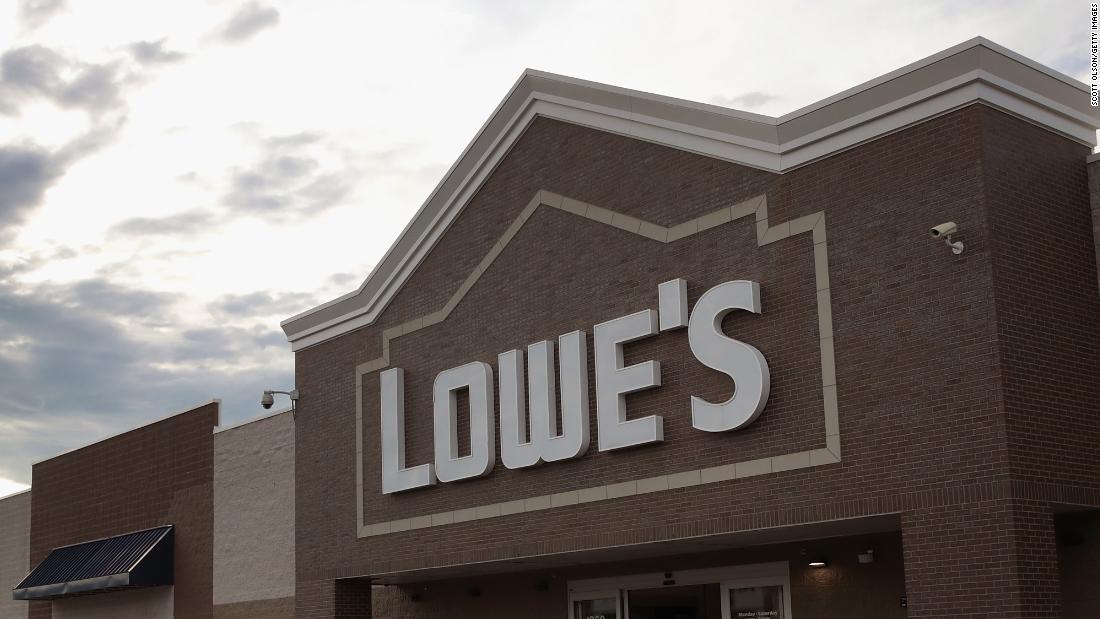
Lowe's executive apologizes for derogatory comment about Hispanics - CNN

"This is perfect for them. Lifetime warranty on this. What else could you want?" said Joe McFarland, Lowe's (LOW) executive vice president of stores, in a corporate video broadcast to store employees Monday. The Washington Post first reported on the video.
McFarland apologized after employees criticized his comments online, saying they were offensive.
"I am sorry for a careless and ignorant comment I made during an associate broadcast yesterday," he said in a company-issued statement, adding that he took full responsibility and will be "spending time in the coming days and weeks with our associates, customers and business leaders to learn and grow from this moment."
McFarland joined Lowe's last year from JCPenney (JCP), where he oversaw that company's stores, operations and merchandise strategies. He previously worked at Home Depot (HD).
Lowe's did not say whether he would face any consequences consequences for the comments.
The company operates more than 1,700 stores in the United States. As of February 1, it employed approximately 190,000 full-time and 110,000 part-time workers in the United States, Canada and Mexico. Earlier this month, Lowe's said it would lay off thousands of workers, including assemblers who put together items like grills and patio furniture. It will also cut maintenance and facility-service jobs, such as janitors, and outsource those positions to third-party companies.
Correction: An earlier version of this story misstated which company had said earlier this month that it was cutting jobs.

Let's block ads! (Why?)


https://www.cnn.com/2019/08/27/business/lowes-executive-hispanic-comments/index.html

2019-08-27 21:40:00Z
52780365637303

Stocks making the biggest moves midday: Altria, Johnson & Johnson, AB InBev & more - CNBC

Traders on the floor of the New York Stock Exchange.

Getty Images

Check out the companies making headlines midday Tuesday:

Philip Morris, Altria — Altria shares popped as much as 11.3% after the tobacco giant, along with Philip Morris, confirmed the two companies were in merger talks. The deal would be an all-stock merger of equals. This would reunite the two companies after Altria was spun off from Philip Morris in 2008. Shares of Altria later gave up their gains after CNBC reported that the deal does not envision a premium for shareholders of either company.

Zynga — Shares of Zynga rose 2.7% on Tuesday after Wedbush added the stock to its "best ideas" list. The firm cited the success of the gaming company's popular games, Empires & Puzzles and Merge Dragons, and three new releases expected this year as reasons for the move. Wedbush has a price target of $9 per share for the stock, more than a 50% premium over where it opened trading on Wednesday.

Chipotle — Shares of the Mexican food chain rose 2% after Suntrust raised its price target to $900 from $815. The new price target implies an upside of 8.9% from Monday's close of $826.80. Suntrust cited Chipotle's national roll-out of its carne asada as a reason for the hike.

Weight Watchers — The weight loss company's stock jumped 2.2% after an analyst at Craig-Hallum upgraded it to buy from hold. The analyst cited "improving trends," including a positive response to Kurbo, a new diet program app designed for children.

Verizon — Verizon rose 1.3% after Oppenheimer upgraded the telecom giant to outperform from perform. Oppenheimer said the potential customer churn created by the proposed merger between Sprint and T-Mobile could allow Verizon to gain customers and that Verizon is poised to be "early and successful" with its 5G network. Oppenheimer has a price target of $70 per share for the stock, about 22% above where it opened trading on Tuesday.

Shopify — An analyst at Rosenblatt Securities hiked his price target on Shopify to $481 per share from $410. The new price target implies a 22.5% upside from Monday's close of $395.96. The analyst said Shopify's fulfillment network revenue could surge to $6 billion by 2025.

Johnson & Johnson — A judge ruled Johnson & Johnson must pay $572 million in an opioid case in Oklahoma. But while the judge ruled against the company, the penalty was much lower than feared. According to Evercore ISI, investors were expecting the company to be fined between $500 million and $5 billion.

Roku — Shares of Roku rose as much as 2.6% before trading up 0.5% after an analyst at William Blair said the streaming company is growing at a faster rate than Netflix was at a similar stage in the company's life. The firm also said it expects Roku to reach 80 million active accounts by 2025.

AB InBev — Shares of the beer giant fell more than 1% after an analyst at Barclays downgraded them to underweight from equal weight. The analyst said Heineken's growing market share in Brazil, Colombia and South Africa will hurt AB InBev while the U.S. — the company's largest market — will likely remain "in structural decline."

—CNBC's Maggie Fitzgerald, Jesse Pound and Elizabeth Myong contributed to this report.

Let's block ads! (Why?)


https://www.cnbc.com/2019/08/27/stocks-making-the-biggest-moves-midday-altria-johnson-johnson.html

2019-08-27 17:44:25Z
52780364525011

Philip Morris, Altria Eye Merger to Meet New Challenges to Tobacco - Investing.com

© Reuters. © Reuters.

Investing.com - The companies behind the world’s best-known cigarette brand are looking to reunite.

Philip Morris International (NYSE:) and Altria (NYSE:) said on Tuesday they’re in talks to carry out an all-stock merger, a deal that would create a company worth more than $200 billion, 11 years after they split in an attempt to shield shareholders from potentially ruinous litigation in the U.S.

Altria's shares rose over 8% in early trading, while Philip Morris fell 5.5%, reflecting the fact that U.S.-focused Altria still trades at a hefty discount to its international half. At Monday’s closing levels, Altria was worth $80 billion, while PMI was worth $121 billion.

In a press release, the two companies styled the deal as “a merger of equals”, implying that shareholders of Altria could be set for a windfall. But they warned that a deal isn't certain:

"There can be no assurance that any agreement or transaction will result from these discussions," the press release said. "Additionally, there can be no assurance that if an agreement is reached, that a transaction will be completed."

A deal would also need the approval of both companies’ boards and shareholders, and regulators.

The move comes at a time when both companies are struggling with declining sales of their traditional product, cigarettes, and a profound change in habits among a new generation of more health-conscious consumers.

Altria in particular has tried to solve that strategic dilemma with investments in vaping company Juul Labs, in which it now owns a 35% stake, and a $1.8 billion investment in Canadian cannabis stock Cronos Group (NASDAQ:).

On Monday, Wells Fargo (NYSE:) analyst Bonnie Herzog had said that Philip Morris) would be the ideal partner for growing Juul Labs’ presence abroad, according to Reuters.

Disclaimer: Fusion Media would like to remind you that the data contained in this website is not necessarily real-time nor accurate. All CFDs (stocks, indexes, futures) and Forex prices are not provided by exchanges but rather by market makers, and so prices may not be accurate and may differ from the actual market price, meaning prices are indicative and not appropriate for trading purposes. Therefore Fusion Media doesn`t bear any responsibility for any trading losses you might incur as a result of using this data.

Fusion Media or anyone involved with Fusion Media will not accept any liability for loss or damage as a result of reliance on the information including data, quotes, charts and buy/sell signals contained within this website. Please be fully informed regarding the risks and costs associated with trading the financial markets, it is one of the riskiest investment forms possible.

Let's block ads! (Why?)


https://www.investing.com/news/stock-market-news/philip-morris-altria-eye-merger-to-meet-new-challenges-to-tobacco-1964438

2019-08-27 14:45:00Z
52780364525011

Uber and Lyft's driver take rates higher than they say: Jalopnik - INSIDER

  • The car-news site Jalopnik asked Uber and Lyft drivers to send in their receipts in an effort to analyze how much the companies were skimming off the drivers' fares.
  • In analyzing 14,756 fares, Jalopnik found that both companies were taking heftier chunks of drivers' fees than had been reported.
  • Uber and Lyft disputed the figures, saying the sample sizes were not representative of the millions of rides taken each day.
  • Visit Business Insider's homepage for more stories.

A Jalopnik analysis of 14,756 ride fares from Uber and Lyft drivers found the ride-hailing apps to be taking a bigger bite out of drivers' fares than they say they do.

The amount of money Uber and Lyft skim off drivers' fares is referred to as the "take rate," and it has been a point of contention in the past as drivers have protested their pay as inadequate.

Jalopnik asked Uber and Lyft drivers to either fill out forms where they could break down fares from a single ride or to send emails with data from all of a driver's fares over a given time period. It found:

  • Overall, Uber took a 35% cut of rides, and Lyft took 38%.
  • Studying only the receipts sent in by drivers who kept records of all their rides over given time periods, the average takes were 29.6% for Uber and 34.5% for Lyft.

When Uber went public in May it reported its take rate for 2018 to be 21.7%, a number that dropped to 19% as of the second quarter of 2019. Business Insider previously reported Lyft's 2018 take rate as 26%, though the company told Jalopnik it did not publicly share its take rates. The two companies also calculate the take rate slightly differently, with Uber factoring in tolls and surcharges.

For Uber, the 35% take rate that Jalopnik found was more than 84% higher than the number the company gave in an earnings call earlier this month. The 35% figure is close to the finding of a study last year by the Economic Policy Institute, which said Uber skimmed about 33% off of its drivers' fares.

Read more: I'm a driver for Uber and Lyft — here are 10 things I wish I knew before starting the job

Both Uber and Lyft disputed Jalopnik's findings, saying the sample size was too small to be representative. Both declined to provide Jalopnik with statistically significant datasets.

Jalopnik acknowledged that 14,756 represented only a tiny fraction of the millions of Uber and Lyft trips made each day. An Uber spokesman said roughly 15 million Uber rides took place every day worldwide. Jalopnik also conceded that there might have been selection bias for drivers unhappy with the cut being taken out of their fares.

Uber and Lyft were not immediately available for comment when contacted by Business Insider.

Let's block ads! (Why?)


https://www.insider.com/uber-and-lyft-take-rates-higher-than-admit-jalopnik-2019-8

2019-08-27 10:27:48Z
52780364254679