Jumat, 04 Oktober 2019

BP CEO Bob Dudley to step down, Bernard Looney will succeed - CNBC

British Petroleum (BP) Chief Executive Bob Dudley (R) participates to a conference during the event "Tomorrow in Motion" on October 1st, 2018 on the eve of the first press day of the Paris Motor Show.

ERIC PIERMONT | AFP | Getty Images

BP chief executive Bob Dudley will step down from his current role at the end of March next year, the energy giant announced Friday.

Dudley, who has worked with BP for 40 years and held the position of CEO for almost a decade, will be replaced by BP's current upstream chief executive, Bernard Looney.

The FTSE 100 giant said in a press release that Dudley, who is 64 years old, has decided to step down from his role following the delivery of the firm's 2019 full-year results on February 4, 2020. He will then retire on March 31 later that year.

Looney, 49, will continue with his current role until February 5, at which point he will take the reins from Dudley and join the BP board.

Shares of BP traded up almost 1% on the news.

"It has been the privilege of a lifetime to serve this company and work in this industry for the past four decades. I have worked with so many committed people from all over the world — both inside and outside BP — and I am enormously proud of all the things we have achieved together to provide energy for the world," Dudley said in a statement on Friday.

"Bernard (Looney) is a terrific choice to lead the company next. He knows BP and our industry as well as anyone but is creative and not bound by traditional ways of working. I have no doubt that he will thoughtfully lead BP through the transition to a low carbon future," he added.

'Challenging time'

Dudley took over as CEO of BP on October 1, 2010 in the wake of the biggest oil spill in U.S. history. The Deepwater Horizon catastrophe killed 11 people and threatened the company's existence.

His job was to try to restore the company to a position it held before the explosion, managing the company's balance sheet as it faced billions of dollars worth of penalties and clean-up costs.

"Bob has dedicated his whole career to the service of this industry. He was appointed chief executive at probably the most challenging time in BP's history," BP Chairman Helge Lund said in a statement.

"During his tenure he has led the recovery from the Deepwater Horizon accident, rebuilt BP as a stronger, safer company and helped it re-earn its position as one of the leaders of the energy sector. This company — and indeed the whole industry — owes him a debt of gratitude," Lund said.

A BP company logo is displayed on a fuel pump on the forecourt of a gas station operated by BP Plc in London, U.K.

Chris Ratcliffe | Bloomberg | Getty Images

The BP CEO also faced a historic collapse in oil prices in 2014, with the downturn in crude futures ultimately forcing BP to pull back on capital spending plans and delay investment projects.

More recently, BP agreed to a request from shareholders in May for greater detail and transparency on how each capital investment decision would align with the Paris climate agreement — an international accord that seeks to limit global warming to less than 2 degrees Celsius.

Last month, Dudley said BP would sell some of its most carbon-intensive projects and reduce investment in others to try to improve the firm's environmental footprint.

The energy giant has been targeted by climate activist groups on numerous occasions in recent months, with demonstrators increasingly angry about the lack of progress toward a lower-carbon future.

Shares of BP have increased by about 10% since Dudley came to the helm.

Who is Bernard Looney?

Looney has run BP's upstream business since April 2016 and has been a member of the firm's executive management team since November 2010.

BP's upstream segment includes 17,000 people operating across almost 30 countries and produces around 2.6 million barrels equivalent of oil and gas a day.

An Irish citizen, Looney joined BP in 1991 as a drilling engineer and worked in operational roles in the North Sea, Vietnam and the Gulf of Mexico.

"It has been a great pleasure to work with Bob and it is an honor to succeed him as chief executive. I am humbled by the responsibility that is being entrusted to me by the board and am truly excited about both the role and BP's future," Looney said.

"Our company has amazing people, tremendous assets, and a set of core values that guide our actions, but most of all we have a desire to be better. I look forward to tapping into that desire and building on the strong foundation that Bob has built as we meet society's demand for cleaner, better energy."

Let's block ads! (Why?)


https://www.cnbc.com/2019/10/04/bp-ceo-bob-dudley-to-step-down-bernard-looney-will-succeed.html

2019-10-04 05:42:57Z
CAIiEOKZl0dXsrYAadCsZG-lfK0qGQgEKhAIACoHCAow2Nb3CjDivdcCMOryngY

Kamis, 03 Oktober 2019

Pepsi's stock jumps 3% as higher advertising spending fuels sales growth and earnings beat - CNBC

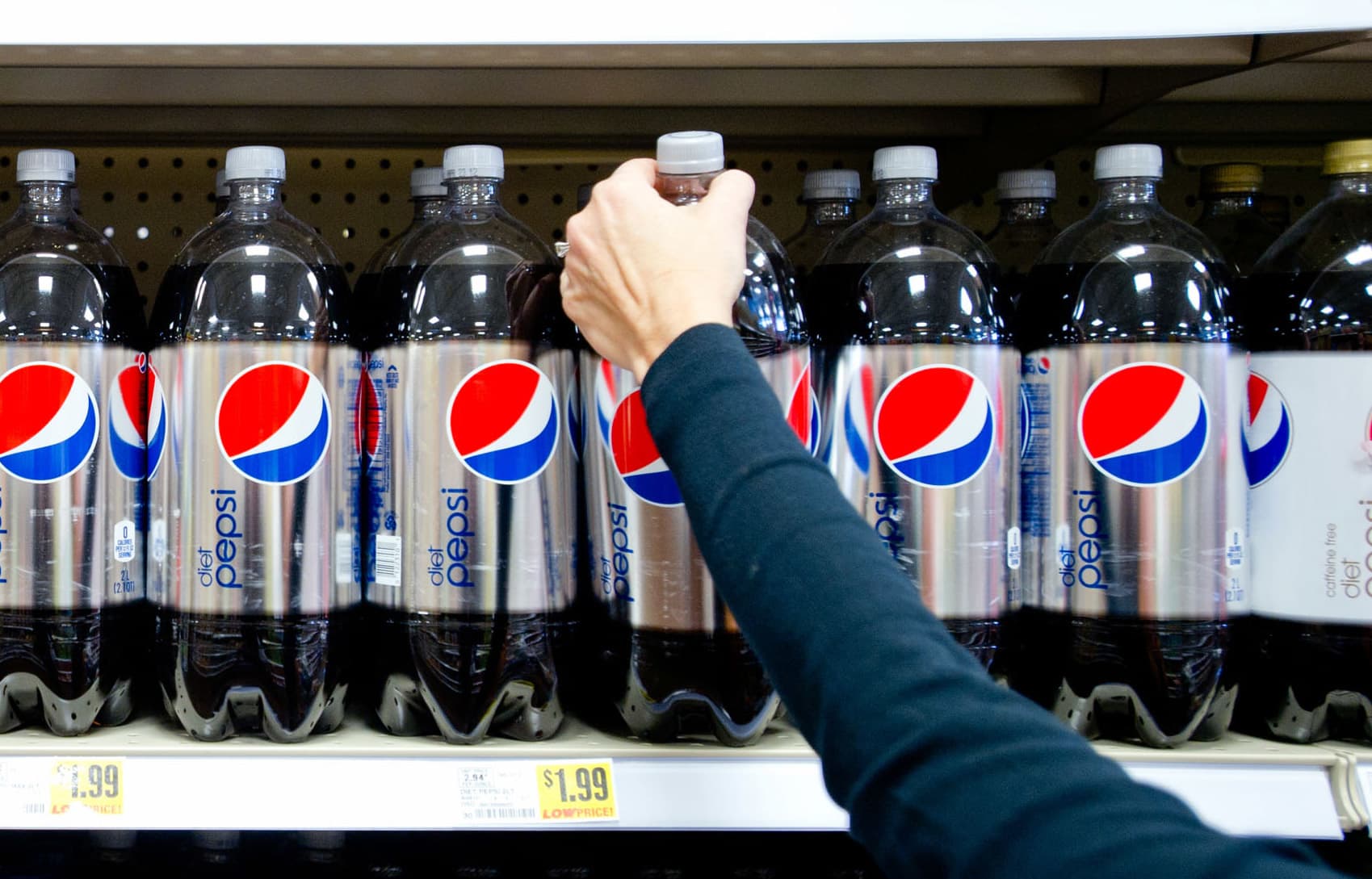
A woman grabs a bottle of Diet Pepsi in Atlanta, Georgia.

Chris Rank | Bloomberg | Getty Images

PepsiCo on Thursday announced quarterly earnings and revenue that topped expectations, as its increased spending on advertising and marketing paid off for brands like Gatorade.

Shares of the food and beverage giant jumped 3% in premarket trading.

"Given our performance year-to-date, we now expect to meet or exceed our full-year organic revenue growth target of 4%," CEO Ramon Laguarta said in a statement.

The company reaffirmed its earnings outlook for fiscal 2019. It expects adjusted earnings per share, assuming constant foreign currency exchange rates, to decline by 1%.

Here's what the company reported compared with what Wall Street was expecting, based on a survey of analysts by Refinitiv:

  • Earnings per share: $1.56, adjusted, vs. $1.50 expected
  • Revenue: $17.19 billion vs. $16.93 billion expected

Pepsi reported fiscal third quarter net income of $2.1 billion, or $1.49 per share, down from $2.5 billion, or $1.75 per share, a year earlier. The company's strategy for sales growth includes investing more on marketing and advertising its products.

Excluding the impact of foreign exchange, restructuring charges and other items, Pepsi earned $1.56 per share, topping the $1.50 per share expected by analysts surveyed by Refinitiv.

Net sales rose 4.3% to $17.19 billion, topping expectations of $16.93 billion.

Frito Lay North America, which includes brands like Cheetos and Doritos, saw revenue growth of 5.5%. Pepsi has been expanding its snack lineup with healthier options, through brands like Bare and Off the Eaten Path. Revenue growth from those healthier snacks and well-known chip brands helped offset the double-digit sales declines of Sabra hummus and guacamole dips. Pepsi owns a 50% stake of the hummus maker through a joint venture with Strauss Group.

Its North American beverage business also performed well, with 3.5% revenue growth. Gatorade improved its market share and saw positive net revenue growth during the quarter. The brand's no-sugar line, Gatorade Zero, which launched in May 2018, surpassed a half-billion dollars in retail sales.

Bubly, which the company expects will be one of its next billion dollar brands, is continuing to gain market share in the flavored sparkling water category against competitors like La Croix.

Pepsi's organic revenue also grew by 4.3% during the quarter.

Let's block ads! (Why?)


https://www.cnbc.com/2019/10/03/pepsico-pep-earnings-q3-2019.html

2019-10-03 10:45:47Z
52780400208836

PepsiCo, Constellation Brands, Costco earnings — What to know in markets Thursday - Yahoo Finance

Markets have been off to a rocky start to kick off October and the fourth quarter. Three key earning reports — beverage giant PepsiCo (PEP), beer brand Constellation Brands (STZ) and big-box retailer Costco (COST) — could help boost stocks Thursday.

Ahead of the opening bell, PepsiCo and Constellation Brands take the spotlight.

Analysts are predicting that PepsiCo’s Frito-Lay North America business strength continued in the third quarter. Snacks have been the bright spot for the beverage giant over recent quarters. Though the beverage business has been underperforming snacks, analysts expect the North American beverages segment to show a bit of improvement. Investors will be paying close attention to full-year earnings and revenue guidance.

PepsiCo is expected to report adjusted earnings of $1.50 per share on $16.93 billion in sales, according to analysts polled by Bloomberg. Organic sales are projected to have grown 3.4% during the quarter. Frito-Lay North America is expected to have risen 5%, while 1.75% growth is anticipated for Beverages North America.

Corona beer bottles seen on the store shelf (Photo by Igor Golovniov/SOPA Images/LightRocket via Getty Images)

Constellation Brands will release fiscal second-quarter results and is expected to report adjusted earnings of $2.63 per share on $2.34 billion of revenue. Last month, the company said its Q2 results would include a $38.5 million net loss from its investment in Canopy Growth (CGC). Nevertheless, Constellations beer sales will be the focal point for investors and analysts.

Second quarter beer net sales are estimated to have totaled $1.64 billion and shipment volume is expected to have reached 92.97 million cases, up from 82.1 million cases in the first quarter. The options market is implying a nearly 6% move in either direction following Constellations earnings report.

Meanwhile, after the closing bell, retail giant Costco will release its fiscal fourth quarter financial results. Costco’s strong same-store sales momentum is expected to have continued in Q4. Excluding fuel and the impact of foreign exchange, same-store sales in the U.S. are expected to have risen 5.4% and 5.7% in Canada and international markets, respectively, according to Bloomberg-compiled estimates. Furthermore, strong loyalty among customers likely boosted membership revenue by 5.3% during the quarter. The retailer is expected to report adjusted earnings of $2.54 per share on $47.70 billion in revenue.

The ongoing trade war and U.S. tariffs on Chinese goods continues to be a concern for retailers. Investors will be paying attention to any additional commentary regarding the tariffs. Costco has been crushing its competitors. Shares have skyrocketed a whopping 40% this year, while Walmart (WMT) jumped 26%, and BJ’s Wholesale Club (BJ) rose 12% in the same time period.

Yahoo Finance All Markets Summit

Heidi Chung is a reporter at Yahoo Finance. Follow her on Twitter: @heidi_chung.

More from Heidi:

Read the latest stocks and stock market news from Yahoo Finance

Follow Yahoo Finance on Twitter, Facebook, Instagram, Flipboard, LinkedIn, and reddit.

Let's block ads! (Why?)


https://finance.yahoo.com/news/pepsi-co-constellation-brands-costco-earnings-what-to-know-in-markets-thursday-094949333.html

2019-10-03 09:49:00Z
52780399516819

Asian stocks slide as U.S. tariffs on EU fan growth worries - Investing.com

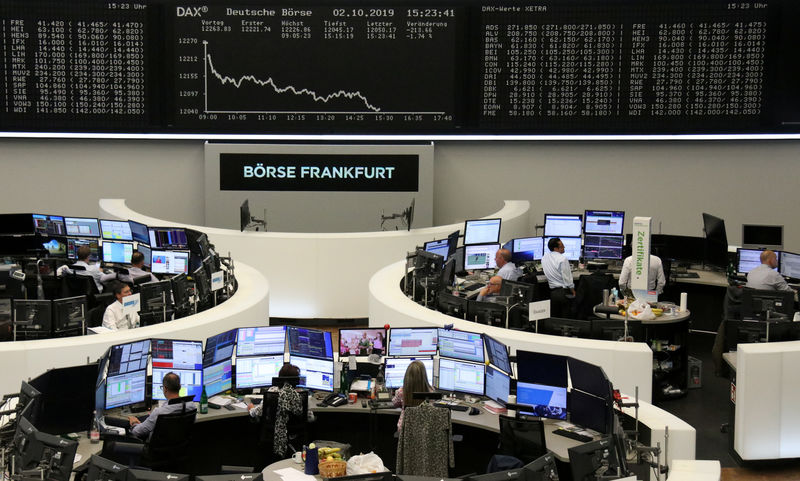
© Reuters. FILE PHOTO: The German share price index DAX graph at the stock exchange in Frankfurt © Reuters. FILE PHOTO: The German share price index DAX graph at the stock exchange in Frankfurt

By Karin Strohecker

LONDON (Reuters) - World stocks hovered near four-week lows on Thursday and yields on major benchmark bonds slipped after Washington moved to impose new tariffs on European goods, fuelling fears about global growth and dousing risk appetite.

MSCI's index of world stocks () slipped 0.1%, with Asian shares plunging. Japan's Nikkei stock index () closing down 2%, its biggest one-day decline since Aug. 26.

However, European stocks eked out small gains after suffering their worst day since last December on Wednesday, when the U.S. got the go-ahead to impose tariffs on $7.5 billion of European goods.

Washington will enact 10% tariffs on Airbus (PA:) planes and 25% duties on French wine, Scotch and Irish whiskies and cheese from across the continent as punishment for illegal EU subsidies to Airbus.

But a reduction in the initial list propped up some sectors with the pan-regional STOXX 600 index () up 0.2%, torn between falls in financials and gains in luxury goods stocks. France's CAC index () rose 0.7% while Britain's FTSE 100 () fell 0.5%. German bourses - a weather vane for exports - were closed for a national holiday.

The latest U.S.-European trade tensions added to fears over the standoff between Washington and Beijing, which has cast a shadow over global growth prospects. Earlier in the week, disappointing data on U.S. manufacturing and the jobs market suggested the trade war with China had damaged the world's largest economy.

"The big question for a lot of folks is whether this is the third slowdown since the financial crisis or are we now heading for a global recession," said Anujeet Sareen, a fixed income portfolio manager and global macro strategist for Brandywine Global. "The wild card in the pack is always Donald Trump and whatever he tweets next."

U.S. stock futures () () indicated 0.4% higher, after shares fell the most in nearly six weeks on Wednesday. All three major New York share indexes lost more than 1.5%.

"Risk aversion is broadly on the rise and that has been triggered by the weakness in U.S. manufacturing ISM data earlier this week," said Manuel Oliveri, an FX strategist at Credit Agricole (PA:) in London.

"The outperformance of the U.S. economy compared to other major economies has held the dollar and other risky assets up but that has changed this week."

The flight to safety saw yields on two-year U.S. Treasury yields () slip to 1.4680%, nearing a two-year low of 1.4280%. Adding to pressure on yields was a weak U.S. jobs report, boosting expectations the Federal Reserve will cut interest rates this month.

Traders see a 72.8% chance the Fed will cut rates by 25 basis points to 1.75%-2.00% in October, up from 39.6% on Monday, according to CME Group's FedWatch tool.

Bets on a rate cut could rise further if a U.S. non-farm payrolls report on Friday shows weakness in the labor market.

Government bond yields in safe-haven Germany () fell for the first time in over a week.

In currency markets, the dollar dipped to one-week lows against the euro and yen. The greenback crossed 107 Japanese yen and touched a week low of 106.95 yen before recovering some ground. It fell to $1.0973 per euro (). The () slipped 0.1%.

Meanwhile, sterling was flat at $1.2306 as investors waited for a European Union response to Britain's latest Brexit offer, which Prime Minister Boris Johnson offered on Wednesday.

So far, the last-ditch Brexit proposal has received a cool reception. One senior EU official said it "can't fly" because it was an unworkable move backwards that left Britain and the EU far apart.

Brent crude () was flat at $57.84 per barrel. Energy traders are worried about a slowing global economy, an over-supplied market and geopolitical friction in the Middle East.

Let's block ads! (Why?)


https://www.investing.com/news/stock-market-news/asian-stocks-tumble-after-us-announces-tariffs-on-europe-1991148

2019-10-03 06:57:00Z
CBMicWh0dHBzOi8vd3d3LmludmVzdGluZy5jb20vbmV3cy9zdG9jay1tYXJrZXQtbmV3cy9hc2lhbi1zdG9ja3MtdHVtYmxlLWFmdGVyLXVzLWFubm91bmNlcy10YXJpZmZzLW9uLWV1cm9wZS0xOTkxMTQ40gEA

Tesla's Model Y: This Could Be The Company's Most Profitable Vehicle - Seeking Alpha

[unable to retrieve full-text content]

Tesla's Model Y: This Could Be The Company's Most Profitable Vehicle  Seeking AlphaView full coverage on Google News
https://seekingalpha.com/article/4294721-teslas-model-y-companys-profitable-vehicle

2019-10-03 05:07:00Z
CAIiENAVXjDqRmWqj2WIm3XTbQMqFggEKg0IACoGCAowkqEGMJBZMOniuwY

Rabu, 02 Oktober 2019

This could be the next gold mine for Tesla and other electric vehicles - MarketWatch

When people think about charging electric cars, the first thought that comes to mind is: “So you are going to put charging stations at gas stations. There will be long lines of people waiting to charge their cars, since it takes much longer to charge an electric car than to fill a car with gas. It will never work.”

Capitalism will take care of building out the charging infrastructure. My prediction: At some point there will be a charging-station mini-bubble as companies raise capital and do a land grab. Grocery stores will use charging stations to attract customers. Charging stations will be in all parking lots, from restaurants to office buildings. Electric vehicle (EV) charging will be a gold rush, while gas stations will be just another relic of a bygone age, like phone booths and cassette tapes. Future EV batteries will have greater range, last longer, and charge faster.

The transition from internal combustion engine (ICE) cars to electric vehicles is a bit like the transition our ancestors went through when society switched from horses to gasoline-powered cars. At first, people wondered how they would “feed” those cars (grass was more plentiful than gasoline), whether they would have decent roads to actually drive anywhere, and whether cars would be crashing into pedestrians and each other. The shift from horses to cars required a completely new paradigm.

The domain of horses came with an ecosystem that was simply not applicable when we switched to cars. Even though both performed the same function — horses got people and goods from point A to point B — the automobile was fundamentally different, and so was its ecosystem.

I imagine the 110,000 U.S. gas stations that keep ICE cars humming along today will look like a rounding error next to the millions of electric “filling stations” that one day will be located in home garages and public parking lots.

Batteries lead the charge

The engine in an EV, though it will incrementally improve over time, is less important than the battery, which is the most expensive single part of the vehicle and a highly complex one, too. The battery in an EV needs to be treated tenderly to maintain its charge and longevity. Your iPhone, for example, is optimized for duration of a charge but not for battery longevity. First of all, Apple AAPL, +0.28%   has an incentive to build planned obsolescence into its iPhone – it wants you to replace it every three years. Second, most iPhones don’t spend much time sitting outside in extremely hot or cold weather; they mostly remain in the comfort of your pocket, at a battery-friendly temperature. Not least, the cost of replacing a battery in your iPhone is less than $100, but replacing the battery in a Tesla TSLA, +1.59%  costs $10,000.

Read: Relax, Tesla drivers — thieves don’t want your electric cars

Plus: Here’s how to capitalize on the electric car revolution — without buying Tesla’s stock

Tesla doesn’t own the battery-cell technology that goes into its batteries; that belongs to its partner, Japanese conglomerate Panasonic PCRFY, +1.53% 6752, +0.09%  . Tesla designed the battery pack the enclosure that houses the battery cells) and the battery management system controller (computer) that routes and manages electricity flow and the microclimate of the battery cells.

The battery is a key technology for Tesla, but at the moment Panasonic is in control of a big part of it. Just as Apple chose to bring development of the CPU that powers its iPhone in-house, Tesla, which is vertically integrated, may eventually increase its control over its battery technology. The company’s purchase of Maxwell Technologies, which has a battery technology that may significantly lower the cost of cell manufacturing, is the first move toward independence from Panasonic.

On the one hand, this strategy has a great appeal because if Tesla is able to produce a better (more durable, lighter, longer-range, faster-charging) battery at a lower cost, it could become a source of a competitive advantage. Today Tesla doesn’t fully control its destiny when it comes to batteries, so if BMW BMW, -1.40%  decides to use Panasonic’s cells, Panasonic will gladly supply it. BMW would still have to develop its own battery management controller, though.

On the other hand, this vertical-integration strategy could backfire. If EV batteries turn into a commodity and the aforementioned features become ubiquitous, then the lowest-cost manufacturer wins. Tesla would argue that vertical integration will ultimately result in lower costs. The company has built a giant battery factory in Nevada that it calls the Gigafactory. When it is fully operational, the Gigafactory will be able to manufacture twice the quantity of lithium-ion batteries produced globally today. Tesla owns the building, and Panasonic owns the cell manufacturing equipment.

Traditional ICE automakers that are tiptoeing into EVs have taken a more conservative strategy and are relying on suppliers (LG Chem 051910, -2.63%    , Samsung SDI 006400, -2.22%  , and others) to produce a complete battery for them.

One of the biggest differences between the Tesla battery and the batteries used in other companies’ EVs (like the BMW i3, Chevy Volt GM, -3.66%  , and Jaguar i-PACE) is the metals they put in the cathode. Traditional car companies chose the NMC (nickel, manganese, cobalt) combination, while Tesla ended up making a less conservative choice of NCA (nickel, cobalt, aluminum). NCA offers long battery life, quick charging, and great performance. NMC, on the other hand, produces slightly less energy but is less volatile and withstands larger ranges and variations of temperature.

Tesla chose a more potent and more volatile cathode chemistry and elected to control its volatility by trying to manage the macroenvironment of the cells by a special design of the battery enclosure, in order to cool or warm the battery cells as needed. Each battery pack comes with an incredibly sophisticated battery management system that tracks the voltage and temperature of each cell and orchestrates which cells the Model 3 uses.

Lithium-ion batteries are a technology of the late 1980s. This was improved in the 1990s and the early part of this century at a somewhat slow pace (especially compared to semiconductors, which have followed Moore’s law, doubling in speed every 18 months). The rate of improvement has accelerated over the past decade (in large part thanks to Tesla), and the cost per kilowatt hour (kWh) declined to $127 in 2018 from $446 in 2013. The Tesla Model 3, for example, comes with a 75kWh battery, meaning the approximate cost of the battery has declined to $10,000 from $33,000.

From the perspective of how much it will likely evolve over the next decade or two, EV battery technology is still in its infancy. As we transition from ICE cars to EVs, the value of the prize will explode; tens if not hundreds of billions of dollars will be poured into improving the battery. Tesla, for example, has already gone through three reformulations of its battery. My $50,000 Tesla Model 3 has the latest version, which charges faster than the $90,000 Model X or the $80,000 Model S that Tesla sells today.

While in the short run battery technology is going to be an important differentiating factor, in the long run the EV battery will likely become a commodity and the differentiating factors will be in software and self-driving capability. An EV is a giant computer on wheels, and historically as computer hardware is commoditized, most of the remaining value is in the software.

How does one invest in this overvalued market? Our strategy is spelled out in this fairly lengthy article.   

Vitaliy Katsenelson is chief investment officer at Investment Management Associates in Denver, which has no positions in any of the companies mentioned. He is the author of “Active Value Investing” (Wiley) and “The Little Book of Sideways Markets” (Wiley). Read more about how EVs will disrupt the auto industry, including whether Tesla and traditional automakers will survive in the long run, and who's right in the Tesla bull vs. bear debate.

,

Read: 7 tips for buying your first electric vehicle

More: The best EVs and plug-in hybrids

Let's block ads! (Why?)


https://www.marketwatch.com/story/this-could-be-the-next-gold-mine-for-tesla-and-other-electric-vehicles-2019-10-02

2019-10-02 09:20:00Z
52780398841299

In Opioid Settlement, Johnson & Johnson Agrees To Pay Ohio Counties $20 Million - NPR

Akron fire medic Paul Drouhard shows a box containing Naloxone Hydrochloride, a drug carried in all their department emergency response vehicles to treat opioid overdose patients. Keith Srakocic/AP hide caption

toggle caption
Keith Srakocic/AP

Johnson & Johnson and two Ohio counties have reached a tentative $20.4 million settlement that removes the corporation from the first federal lawsuit against opioid manufacturers, scheduled to begin later this month.

In a statement released Tuesday, the healthcare giant said the agreement with Cleveland's Cuyahoga and Akron's Summit counties allows it "to avoid the resource demands and uncertainty of a trial." However, the terms stipulate that Johnson & Johnson makes "no admission of liability."

"[The] Company is open to identifying an appropriate, comprehensive resolution of the overall opioid litigation. At the same time, the Company remains prepared to defend its actions," the statement said.

In a deal which must be approved by a federal judge, Johnson & Johnson agreed to pay the counties a total of $10 million and to reimburse them for $5 million in legal fees. An additional $5.4 million would go toward programs to fight opioid addiction in the two counties.

In 2017, Ohio had the nation's second highest per capita rate of fatal opioid overdoses, with 46.3 deaths per 100,000 people, according to the Centers for Disease Control and Prevention. West Virginia had the highest rate at 57.8 per 100,000, the CDC said.

Janssen Pharmaceuticals, a subsidiary of Johnson & Johnson, made two opioids that were distributed in Cuyahoga and Summit counties. Johnson & Johnson says the drugs were "responsibly marketed" and "accounted for less than one percent of the total opioid prescriptions in the United States."

In August, the drug maker was ordered to pay $572 million in a case in Oklahoma, which blamed Johnson & Johnson for helping fuel the opioid crisis in the state. The company has appealed the ruling.

Judge Thad Balkman, who presided over the Oklahoma case, said the pharmaceutical giant "caused an opioid crisis that is evidenced by increased rates of addiction, overdose deaths and neonatal abstinence syndrome" in the state.

The case involving the Ohio counties is the first federal case to be brought against pharmaceutical companies and is therefore seen as potentially setting precedent for how similar suits will be handled.

Four other drug makers have already settled ahead of the Oct. 21 trial, but McKesson Corp., AmerisourceBergen, Cardinal Health, Teva Pharmaceutical Industries Ltd., Walgreens Boots Alliance Inc. and Henry Schein Inc. are still listed as defendants, according to Reuters.

The maker of OxyContin, Purdue Pharma, which filed for Chapter 11 bankruptcy last month, has reached a tentative settlement in the Ohio suit worth some $12 billion.

Johnson & Johnson, like the other drug makers, still faces some 2,000 other suits in various states related to the opioid epidemic.

Early next year, a similar case brought by West Virginia's Cabell County and the city of Huntington — which have the highest opioid overdose rates in the country — is set to be taken up.

Let's block ads! (Why?)


https://www.npr.org/2019/10/02/766332253/in-opioid-settlement-johnson-johnson-agrees-to-pay-ohio-counties-20-million

2019-10-02 09:41:00Z
52780399115775